

Artemis II Mission 2026
The Day We Looked Up… and Decided to Go Back
Artemis II Mission – For decades, the Moon has been a silent witness.
It has watched humanity evolve—from black-and-white televisions to smartphones, from simple computers to artificial intelligence. Yet, despite all this progress, one thing remained unchanged:
We stopped going to the Moon.
The last time humans traveled that far was during the Apollo 17 Moon Landing. After that, space exploration shifted, priorities changed, and the Moon slowly became a memory rather than a mission.
But deep inside, that curiosity never died.
And in 2026, with the launch of the Artemis II mission, NASA made a powerful statement:
Humanity is ready to go back.
Not just to visit—but to understand, to prepare, and to move forward.
What is Artemis II Mission? A Simple Yet Powerful Idea
At its core, the Artemis II mission is beautifully simple.
It is the first crewed mission of NASA’s Artemis program—a journey where astronauts travel around the Moon and return safely to Earth.
But simplicity can be deceptive.
Because behind this mission lies years of planning, testing, and a deeper purpose: ensuring that humans can once again travel safely into deep space.
Unlike a landing mission, Artemis II is a lunar flyby. That means the spacecraft will not land on the Moon. Instead, it will follow a curved path, swing around the Moon, and return home.
Think of it as a rehearsal before the grand performance.
Artemis II Flyby: Dancing with Gravity
One of the most fascinating aspects of Artemis II is how it travels.
The mission uses a concept called a free-return trajectory—a path where gravity does most of the work.
Instead of relying entirely on engines and fuel, the spacecraft uses the Moon’s gravity to guide its journey.
Here’s what that looks like:
- The spacecraft launches from Earth and gains speed
- It travels deep into space, far beyond Earth’s orbit
- The Moon’s gravity pulls it into a curved path
- The spacecraft loops around and heads back to Earth
It’s like throwing a stone in space and letting gravity bring it back—except this “stone” carries human lives, dreams, and the future of exploration.
How Long Will Artemis II Mission Last?
The Artemis II mission is planned to last around 10 days.
Ten days may not sound like much, but in space, every second matters.
During this journey, astronauts will experience:
- Leaving Earth behind and seeing it shrink into the distance
- Traveling farther than most humans ever have
- Witnessing the Moon up close—but from orbit
- Returning to Earth at incredible speeds
Each of these moments is carefully planned, tested, and observed—because every detail will shape future missions.
What is the Purpose of Artemis II Mission?
If Artemis II is not landing on the Moon, then why is it so important?
The answer lies in preparation.
This mission is designed to test everything that will be needed for future Moon landings and Mars missions.
The key purposes include:
- Testing life-support systems
Can astronauts survive comfortably in deep space for extended periods?
- Validating the Orion spacecraft
Does it perform safely under extreme conditions?
- Understanding human behavior in deep space
How does the human body and mind react beyond Earth’s orbit?
- Practicing navigation and re-entry
Can the spacecraft return safely at high speeds?
- Building confidence for future missions
Can we truly go further?
In simple words:
Artemis II is about proving that humans are ready to go back to the Moon—and beyond.
The Crew: Humanity’s Representatives in Space
Every mission has a story—but the people inside it make it real.
The Artemis II crew is not just a group of astronauts. They represent the diversity, strength, and unity of humanity.
Meet the crew:
- Reid Wiseman – Commander
- Victor Glover – Pilot
- Christina Koch – Mission Specialist
- Jeremy Hansen – Mission Specialist (Canada)
This crew carries something more than responsibility—they carry symbolism.
- A mission representing multiple nations
- A step forward for women in deep space exploration
- A sign of global collaboration
For the first time in decades, space exploration feels inclusive, connected, and human.
Artemis II Mission Photos & Pictures of the Moon & Earth
One of the most exciting aspects of this mission is something people around the world are eagerly waiting for:
Artemis II photos


Image Credit: NASA







Pictures of the Moon from Artemis II

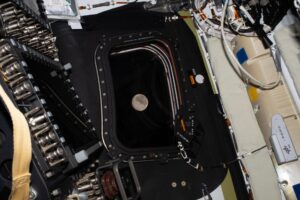
Why does this matter so much?
Because images from space do something words cannot.
They change perspective.
Expected visuals include:
- Earthrise views—our planet rising over the Moon’s horizon
- Close lunar surface images with new clarity
- Deep space shots showing the vastness of the universe
These images will not just go viral—they will inspire.
They will remind us that we are part of something much bigger.
“Netflix Artemis II”: When Reality Feels Like Cinema
Search trends show something interesting:
People are searching for “Netflix Artemis II”.
This tells us something powerful—people don’t just want information. They want stories.
And Artemis II feels like one.
The silence of space, the emotional distance from Earth, the beauty of the Moon—it all feels cinematic.
It’s no surprise that platforms like Netflix may turn missions like this into documentaries or films.
But here’s the truth:
This is not fiction.
This is real life, unfolding in space.
Why Artemis II Mission Matters to Every Human
You might wonder:
“Why should this mission matter to me?”
Because Artemis II is not just about astronauts—it’s about humanity.
It answers one of the biggest questions we have ever asked:
Can humans truly live beyond Earth?
This Artemis II Mission proves:
- We can travel safely into deep space again
- We are capable of exploring beyond our limits
- The Moon is within our reach once more
It brings us closer to becoming a multi-planet species.
The Future After Artemis II Mission
Artemis II is not the destination—it’s the beginning of a new chapter.
After this mission:
- Artemis III will test landing systems
- Artemis IV aims to land humans on the Moon
- Artemis V will begin building a Moon base
Each mission builds on the last—like steps toward a future where humans don’t just visit space, but live in it.
The Challenges Behind the Artemis II Mission 2026
Every great achievement comes with challenges, and Artemis II is no exception.
Some of the key challenges include:
- High costs of space missions
- Delays in technology development
- Complex coordination between teams and countries
- Physical and mental strain on astronauts
But these challenges are part of the journey.
They remind us that progress is never easy—but always worth it.
Final Thoughts on Artemis II Mission: A Journey That Belongs to Humanity
As Artemis II travels through space, it carries more than astronauts.
It carries hope.
It carries curiosity.
It carries the belief that humanity is meant to explore, to grow, and to reach beyond its limits.
When those astronauts look back at Earth, they won’t see borders, conflicts, or divisions.
They’ll see one planet.
One home.
One humanity.
And maybe, just maybe, they’ll remind us of something we often forget:
We are all in this together.
Frequently Asked Questions (Artemis II Mission)
What is the Artemis II mission by NASA?
The Artemis II mission is the first crewed spaceflight of the Artemis program by NASA. It sends four astronauts on a 10-day journey around the Moon to test systems needed for future lunar landings.
What is the purpose of the Artemis II mission?
The purpose of Artemis II is to test the Orion spacecraft, life-support systems, and astronaut performance in deep space before future missions land humans on the Moon.
How long will the Artemis II mission last?
The Artemis II mission will last approximately 10 days, including travel to the Moon, a flyby, and return to Earth.
Will Artemis II land on the Moon?
No, Artemis II will not land on the Moon. It is a lunar flyby mission where astronauts travel around the Moon and return to Earth safely.
Who are the crew members of Artemis II?
The Artemis II crew includes Reid Wiseman, Victor Glover, Christina Koch, and Jeremy Hansen, representing both NASA and international collaboration.
What is Artemis II flyby?
The Artemis II flyby is a maneuver where the spacecraft travels around the Moon using its gravity and returns to Earth without landing.
Why is Artemis II important for the future?
Artemis II is important because it proves humans can safely travel to deep space again, preparing for future Moon landings and missions to Mars.
Will there be photos of the Moon from Artemis II?
Yes, Artemis II is expected to capture stunning images of the Moon, Earth, and deep space, offering a new perspective similar to historic Apollo mission photos.
Is there a Netflix documentary on Artemis II?
Currently, there is no official documentary, but platforms like Netflix may create content in the future due to high public interest.